What Students Learn
Lessons are tailored to each student’s age, goals, and experience level. Areas of study may include:
Technique (scales, arpeggios, chords, and healthy playing habits)
Music theory and note reading
Effective practice strategies
Memorization skills
Musicality and artistic expression
Performance preparation
Students use method books to build strong reading skills while also studying quality repertoire, including works by the great composers.
Practicing at Home
Consistent practice is essential for steady progress at the piano. For younger students, I recommend practicing approximately 30 minutes a day, six days a week. As students advance, practice time naturally increases based on their goals and repertoire.
Parent involvement can make a tremendous difference, especially for younger children. Encouragement, accountability, and establishing a regular practice routine at home help students develop confidence and long-term success.
Performance Opportunities
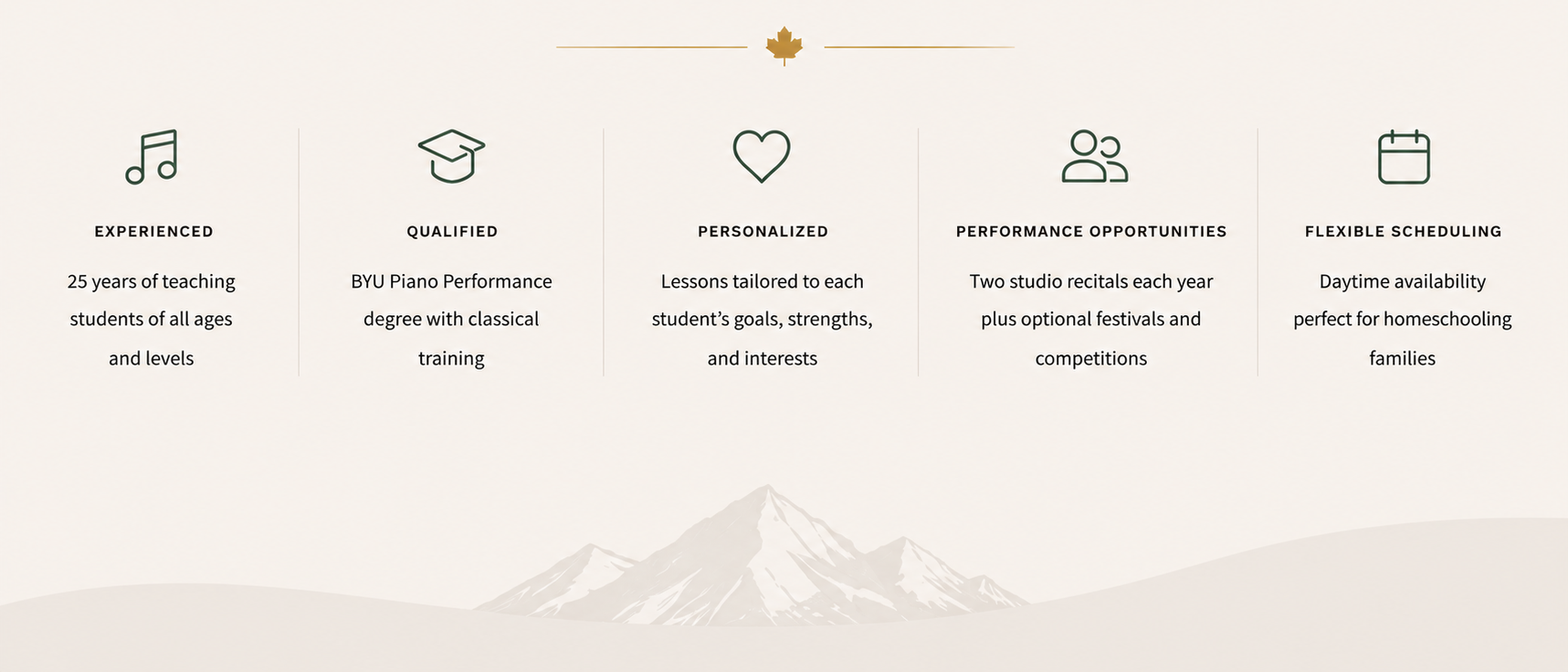
Performing is an important part of musical growth and helps students build confidence, discipline, and a sense of accomplishment.
Students are invited to participate in two studio recitals each year:
December Recital
End-of-School-Year Recital
Additional opportunities, including festivals and competitions, are available for students who wish to pursue more advanced performance experiences.
Lesson Information
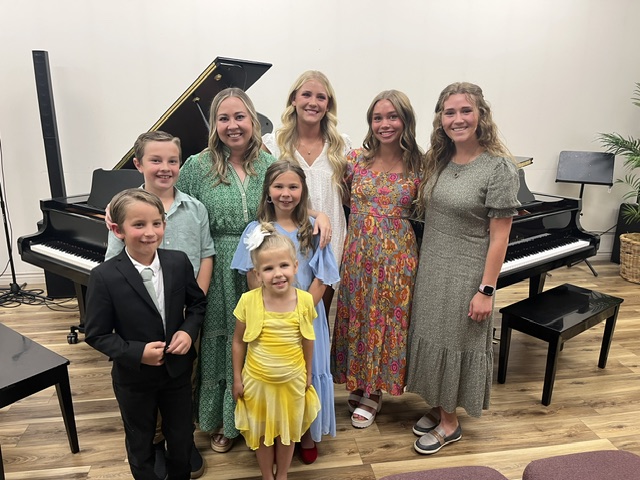
Lessons are held in my home studio in Mapleton, which is equipped with both a Kawai upright piano and a Steinway baby grand. Students should arrive on time with all assigned materials and be ready to learn. My goal is to provide a structured, encouraging environment where students can grow, achieve their goals, and enjoy the process of making music.